

December is a perfect time to count our many blessings. We thank our advertisers, readers, subscribers, distributors and community partner, Volunteer Cowichan for helping us to spread the wellness message. We wish everyone Peace, Happiness and Good Health this Holiday Season.
Community News
Gambling Awareness and Education
Gambling has become progressively more complex with the growth of online gambling products worldwide, including sports betting apps, websites, as well as a variety of in-person and lottery products. Vancouver Island Gaming Support (VIGS) helps navigate this emerging landscape. VIGS contracts with Gambling Support BC (GSBC) to offer education and awareness workshops to anyone in the community interested in learning more about gambling-related topics. Topics include seniors and casinos, young adults and sports betting, affected families and friends, brain chemistry and behavioural addictions and more. We also provide outreach support and counselling services at no charge. We are here to help.
As Winter Comes
Most everyone on the West Coast knows, November brings with it more rain and overcast skies. Many people experience an effect on their mood during this time, which can certainly make things more difficult. Seasonal Affective Disorder (SAD) is a known phenomenon, where the winter weather affects moods and outlook on life. A couple strategies to help overcome these “winter blues” is to continue with those all-important self-care strategies of enjoyable activities, and the regular use of a full-spectrum light of some sort throughout your day! Fight back against the dreary with light!
Foods for Brain Health
The best foods for supporting memory and brain function are those that encourage good blood flow to the brain. Research suggests the following foods may help keep your brain sharp and improve your cognitive function, memory and alertness. 1) Broccoli, cabbage and dark leafy greens. Enjoy salads, wraps and stir-fries. 2) Walnuts. Can be added to salads or oatmeal or just eaten on their own. 3) Berries and cherries. Can be eaten fresh as a snack or added to oatmeal or baked goods. 4) Omega-3 fatty acids. Can be found in seafood, flaxseeds and fatty fish.
Special Offer – Make Life Accessible with Motion
Our knowledgeable experts enjoy making life accessible for everyone by identifying the unique needs of our clients and selecting solutions that fit their lifestyles. Let Motion help you make a difference in your life every day with the right mobility and home accessibility solutions, including wheelchairs, stairlifts, walkers, power lift recliners, bathroom safety items and more. “Because Motion isn’t a place, it’s a partnership.” Special Offer at Motion Nanaimo, Courtenay, Sidney & Victoria: $200 OFF All Stairlifts until November 30, 2023. Straight, curved, and outdoor options are available to fit any stairway. Contact us today to claim the offer and for a no-obligation quote!
Principles of Happier Aging™
We want to change the perceptions of aging. We believe that getting older doesn’t have to feel sad or helpless; instead, aging is something worth celebrating. As Atul Gawande wrote in his book, Being Mortal, “Our ultimate goal, after all, is not a good death but a good life to the very end”. Through our principles of Choice, Belonging, Respect, Autonomy and Purpose, we live Happier Aging. Happier Aging, at home, is our philosophy of care: for our clients, their families, our people and everyone we meet.
10 Interesting Ear Facts
Ears allow us to hear, but what else makes them so special?
Let’s find out!
1. Without your ears, you would lose your balance
Inside your inner ear lies a fascinating maze-like structure known as the vestibular system. Located here are three canals with fluid and small hair cells that detect the rotational movement of your head, whether that be up and down, side to side, or tilting. Each semi-circle canal is located at a different angle so your brain can better judge where your head is moving. They are each responsible for a specific direction of head movement.
Information coming from the vestibular system is processed in the brain and then sent to other organs that need this information, such as the eyes and muscles. This allows us to remain balanced and know what position our body is in. In some situations, (i.e., on a boat,) different sensory organs, such as the eyes, send contradictory messages to the brain. This is what can then cause us to feel unwell, dizzy, or nauseous.1
2. Your ears keep “growing” with age
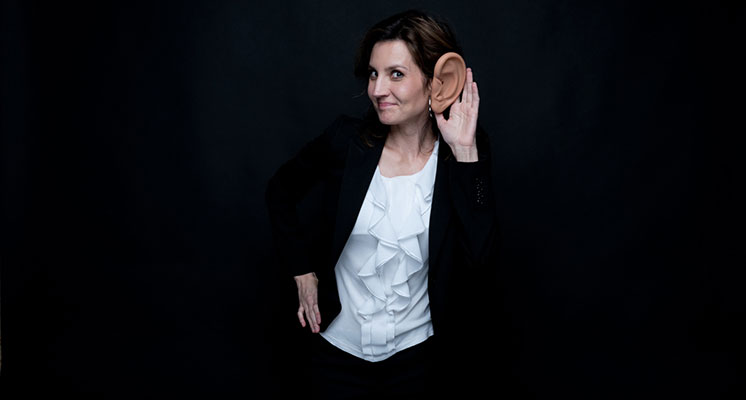
Legend has it that our ears and nose are the only parts of our body that continue growing throughout our lives. They do indeed get larger, but it’s not because they’re literally growing. It’s most likely a combination of natural aging and gravity doing the work.2
As we age, our ears appear to be getting bigger but it’s because the cartilage in our ears is slowly breaking down, and gravity makes them elongate overtime.
3. Ears are self-cleaning
Earwax gets a bad rap.
But the truth is, it’s a completely natural (and essential) part of our ears.
Normal earwax production is a sign that your ears are doing a great job at cleaning themselves. This self-cleaning ability is also a win-win because the wax helps keep the ears moisturized and protected.
4. Ears never sleep

Our ears are still hearing 100% of the sounds around us when we are asleep, even if we’re not aware of it. It’s our brain that’s responsible for processing all the sounds around us and making sense of them.
The sleeping brain continues generating neural responses to surrounding events, but the sleeper is merely in “standby” mode as the brain continues to monitor for relevant signals.3
5. Your ears have very important hairs (that don’t grow back)
The ear has tiny nerve fibers or hair cells that help us maintain balance, but they’re also there to help us hear. These delicate hair cells are very sensitive and can be easily damaged to the point where they break. Once they break, they don’t grow back.
Some of the main reasons for this type of hair cell loss include sound exposure, natural aging, and ear infections. To avoid your risk for hearing loss, it’s important to take care of your ears by avoiding loud noises when possible or protecting your ears with ear plugs or coverings when exposed.4
6. Sound exposure is the leading cause of hearing loss
There are many things that can cause hearing loss, but sound exposure is the number one culprit.
This type of hearing loss falls under the category of Sensorineural Hearing Loss, and though there can be other causes such as aging, ear infections, and certain medications, it’s often caused by exposure to high levels of noise. It can be the result of one loud impulse sound, or from continual exposure to loud sounds over time. It depends on the level of the noise, or pitch, to determine how long it’s safe to be exposed to it.
It can happen to anyone, at any age.
7. Your ears help regulate pressure changes
Ever wonder what makes your ears “pop” on an airplane?
The middle of our ears has a certain amount of pressure around it, and the Eustachian tube in our ears helps keep air pressure equal on both sides of the eardrum to ensure that the pressure does not build up when the surrounding air pressure changes (like on an airplane or somewhere else of a high altitude).5
The Eustachian tubes then opens to relieve some of the pressure when we swallow, which equalizes the pressure inside and outside our ear. That’s what makes them “pop.”
8. The ears are connected to the nose and throat
The ears, nose, and throat are all intricately connected, that’s why there’s a type of doctor who looks at these parts of the body as one unit.
A disturbance in one part can cause a disturbance in the others. So, if there’s an infection in the throat, for example, it can travel to the ear. This is because the Eustachian tube is the pathway that runs through each part and connects them all together.
9. Hearing loss may cause cognitive decline
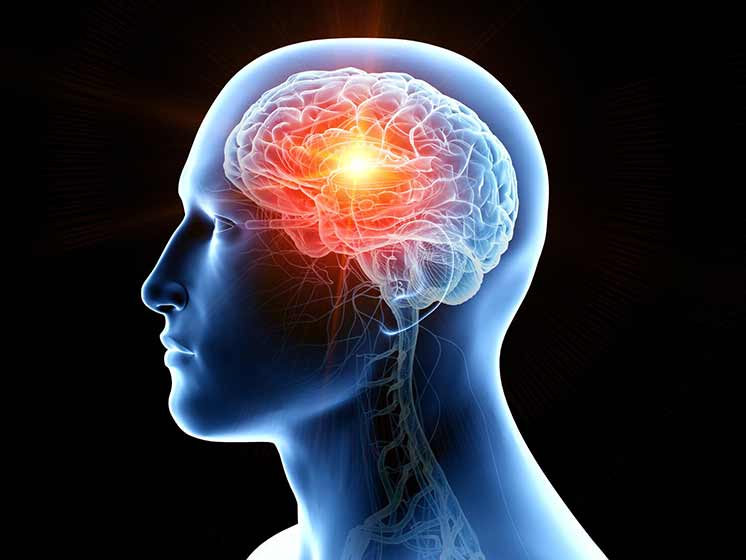
A new report published by the Lancet Commission shows that hearing loss is a risk factor for dementia.6 In fact, moderate hearing impairment can increase one’s dementia risk by 3x.
Even mild levels of hearing loss can increase the long-term risk of cognitive decline and dementia in people who are cognitively intact but somewhat hearing impaired. This is likely because hearing loss leads to lowered mental stimulation, isolation, and depression – all of which contribute to accelerated cognitive decline.
10. We have two ears for a reason
Having two ears helps us figure out which direction sounds are coming from.7 If you have hearing loss in one ear, you can probably notice that it’s hard to decipher where a particular sound is located. Therefore, it’s important to use two hearing aids instead of one when hearing loss is present in both ears, to help locate warning sounds around you, navigate safely through traffic, and walk safely across the road.
Would you like to learn more about your unique ears and hearing? Book a free hearing appointment with one of our hearing care professionals!
Sources
“How Does Our Sense of Balance Work?” NCBI, IQWiG (Institute for Quality and Efficiency in Health Care), 7 Sept. 2017, www.ncbi.nlm.nih.gov/books/NBK279394.“What to Know About Nose and Ear Growth as You Age.” WebMD, 19 Mar. 2021, www.webmd.com/healthy-aging/what-to-know-about-nose-and-ear-growth-as-you-age#1.
Legendre, Guillaume. “Sleepers Track Informative Speech in a…” Nature Human Behaviour, 14 Jan. 2019, www.nature.com/articles/s41562-018-0502-5
“Noise-Induced Hearing Loss.” NIDCD, 31 May 2019, www.nidcd.nih.gov/health/noise-induced-hearing-loss.
Gaihede, Michael. “Middle Ear Pressure Regulation–Complementary Active Actions of the Mastoid and the Eustachian Tube.” PubMed, June 2010, pubmed.ncbi.nlm.nih.gov/20393372.
Orgeta, V., Mukadam, N., Sommerlad, A., & Livingston, G. (2019). The Lancet Commission on Dementia Prevention, Intervention, and Care: A call for action. Irish Journal of Psychological Medicine,36(2), 85-88. doi:10.1017/ipm.2018.4
Hebrank, Jack, and D. Wright. “Are Two Ears Necessary for Localization of Sound Sources on the Median Plane?” The Journal of the Acoustical Society of America, Acoustical Society of America, 1974, asa.scitation.org/doi/abs/10.1121/1.1903351.
Be Savvy If Betting on Sports
Football, hockey and October baseball are in full swing. Single-game sports betting has been legal in Canada for just over two years. As Provinces work to regulate this fast-paced and emerging international industry, people who opt to wager on sports using mobile sports-betting apps need to be savvier than ever before. Straight bets, parlays, futures, prop bets, teasers, money lines, puck lines, and run lines are very new terms representing an array of sports wagering products. If you’re confused, overwhelmed or simply curious to know more, reach out to VI Gaming Support. We’re here to help.
Make Life Accessible with Life-Changing Equipment
Our knowledgeable experts enjoy making life accessible for everyone by identifying the unique needs of our clients and selecting solutions that fit their lifestyles. Let us help you make a difference in your life every day with the right mobility and home accessibility solutions, including *wheelchairs, *stairlifts, *walkers, *power lift recliners, *bathroom safety items and more. We’re also here to help with rental equipment, repairs and maintenance and to assist with navigating funding opportunities. Let us help you make a difference in your life every day with the right mobility and home accessibility solutions. “Because Motion isn’t a place, it’s a partnership.”
Interesting Ear Facts
Ears, beyond hearing, are remarkable for several reasons: *they aid balance, *get larger throughout life due to natural aging and gravity, *are self-cleaning, *remain alert even during sleep, and *house delicate non-regenerating hair cells crucial for hearing. The ears also regulate pressure changes via the Eustachian tube and are connected to the nose and throat as part of an intricate system. Having two ears helps us figure out which direction sounds are coming from. If you or a family member are concerned about hearing loss book a free HearingLife consultation today.
Fall Prevention Tips
Falls in the home are all too common. The good news is, you can make a few modifications in the home that can prevent potential hazards, such as slippery floors, poor lighting, loose rugs, electrical cords and clutter. Start by visiting each room in your home, looking at the space objectively. Ask yourself: Is this safe? Are there objects or items that present a risk? If so, think about the many ways to create a safer home: wear non slip socks or slippers, use night lights in dark hallways, remove throw rugs, keep electrical cords safely hidden behind furniture and organize your projects so they are off the floor and out of walkways.
