






Pre-planning for your final wishes is a compassionate choice that relieves your family of the burdensome task during a time of grief. It provides financial security, shielding against rising costs and disputes. Furthermore, it offers emotional support, allowing loved ones to come together, grieve, and bond. Planning your farewell in advance ensures that your specific wishes and budget are met. It becomes a cherished gift to your loved ones, enabling you to share your life’s story one last time. Remember, if you want to live well and die well, you need to plan your funeral well!
Community News
Make Life Accessible
Our knowledgeable experts enjoy making life accessible for everyone by identifying the unique needs of our clients and selecting solutions that fit their lifestyles. Let us help you make a difference in your life every day with the right mobility and home accessibility solutions, including *wheelchairs, *stairlifts, *walkers, *power lift recliners, *bathroom safety items and more. We’re also here to help with rental equipment, repairs and maintenance and to assist with navigating funding opportunities. Let us help you make a difference in your life every day with the right mobility and home accessibility solutions. “Because Motion isn’t a place, it’s a partnership.”
Cumberland 50+ Drop In
The Cumberland Drop-In Social Club, in Buchanan Hall, is a volunteer-led initiative that welcomes mature adults (50+) of all abilities to play games, pursue favourite leisure pastimes and enjoy the company of friends and neighbours. Tuesdays and Fridays from 10am to 12pm. $3 drop-in fee, or free with a Cumberland Recreation membership
Volunteers Always Needed!
The strength of CVSS comes from our amazing volunteers. If you would like to visit with a lonely or isolated senior, or assist someone with accessing services in the community, or if you have another strength to offer, please contact us to learn more about providing support in your community. Beginning in September, volunteer training sessions will be done monthly so there will be only minimal waiting before you can begin! Volunteers are provided with monthly support meetings and regular education sessions.
Comox Valley Elder College
It’s Fall and that’s the start of Elder College in the Comox Valley. The mission of Elder College is enhancing the quality of life in older adults in our community by offering affordable opportunities for continued learning. Check out the Fall program schedule that includes on-campus, online (digital) and off-site courses. https://www.nic.bc.ca/continuing-education/eldercollege/comox-valley/
Canadian Longitudinal Study on Aging (CLSA)
The CLSA is a large, national, long-term study of more than 50,000 individuals who were between the ages of 45 and 85 when recruited. These participants will be followed until 2033 or death. The aim of this study is to find ways to help us live long and live well and understand differences in ageing. The data from this research will contribute to identifying ways to prevent disease and improve health services, develop a better understanding of non-medical factors as people age, as well as answer important questions that are relevant to decision-makers. For more information: https://www.clsa-elcv.ca/about-us
10 Interesting Ear Facts
Ears allow us to hear, but what else makes them so special?
Let’s find out!
1. Without your ears, you would lose your balance
Inside your inner ear lies a fascinating maze-like structure known as the vestibular system. Located here are three canals with fluid and small hair cells that detect the rotational movement of your head, whether that be up and down, side to side, or tilting. Each semi-circle canal is located at a different angle so your brain can better judge where your head is moving. They are each responsible for a specific direction of head movement.
Information coming from the vestibular system is processed in the brain and then sent to other organs that need this information, such as the eyes and muscles. This allows us to remain balanced and know what position our body is in. In some situations, (i.e., on a boat,) different sensory organs, such as the eyes, send contradictory messages to the brain. This is what can then cause us to feel unwell, dizzy, or nauseous.1
2. Your ears keep “growing” with age
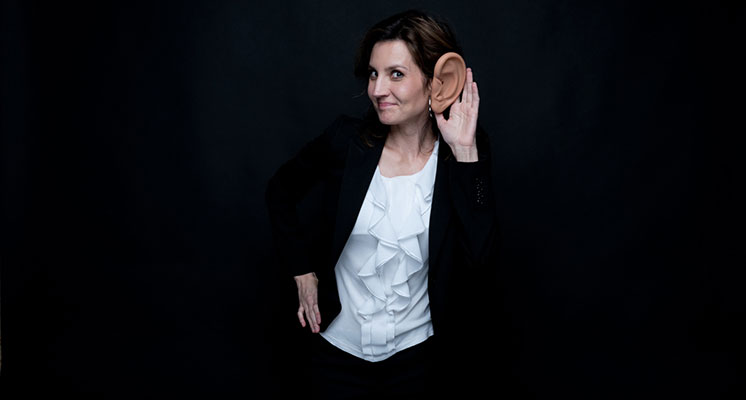
Legend has it that our ears and nose are the only parts of our body that continue growing throughout our lives. They do indeed get larger, but it’s not because they’re literally growing. It’s most likely a combination of natural aging and gravity doing the work.2
As we age, our ears appear to be getting bigger but it’s because the cartilage in our ears is slowly breaking down, and gravity makes them elongate overtime.
3. Ears are self-cleaning
Earwax gets a bad rap.
But the truth is, it’s a completely natural (and essential) part of our ears.
Normal earwax production is a sign that your ears are doing a great job at cleaning themselves. This self-cleaning ability is also a win-win because the wax helps keep the ears moisturized and protected.
4. Ears never sleep

Our ears are still hearing 100% of the sounds around us when we are asleep, even if we’re not aware of it. It’s our brain that’s responsible for processing all the sounds around us and making sense of them.
The sleeping brain continues generating neural responses to surrounding events, but the sleeper is merely in “standby” mode as the brain continues to monitor for relevant signals.3
5. Your ears have very important hairs (that don’t grow back)
The ear has tiny nerve fibers or hair cells that help us maintain balance, but they’re also there to help us hear. These delicate hair cells are very sensitive and can be easily damaged to the point where they break. Once they break, they don’t grow back.
Some of the main reasons for this type of hair cell loss include sound exposure, natural aging, and ear infections. To avoid your risk for hearing loss, it’s important to take care of your ears by avoiding loud noises when possible or protecting your ears with ear plugs or coverings when exposed.4
6. Sound exposure is the leading cause of hearing loss
There are many things that can cause hearing loss, but sound exposure is the number one culprit.
This type of hearing loss falls under the category of Sensorineural Hearing Loss, and though there can be other causes such as aging, ear infections, and certain medications, it’s often caused by exposure to high levels of noise. It can be the result of one loud impulse sound, or from continual exposure to loud sounds over time. It depends on the level of the noise, or pitch, to determine how long it’s safe to be exposed to it.
It can happen to anyone, at any age.
7. Your ears help regulate pressure changes
Ever wonder what makes your ears “pop” on an airplane?
The middle of our ears has a certain amount of pressure around it, and the Eustachian tube in our ears helps keep air pressure equal on both sides of the eardrum to ensure that the pressure does not build up when the surrounding air pressure changes (like on an airplane or somewhere else of a high altitude).5
The Eustachian tubes then opens to relieve some of the pressure when we swallow, which equalizes the pressure inside and outside our ear. That’s what makes them “pop.”
8. The ears are connected to the nose and throat
The ears, nose, and throat are all intricately connected, that’s why there’s a type of doctor who looks at these parts of the body as one unit.
A disturbance in one part can cause a disturbance in the others. So, if there’s an infection in the throat, for example, it can travel to the ear. This is because the Eustachian tube is the pathway that runs through each part and connects them all together.
9. Hearing loss may cause cognitive decline
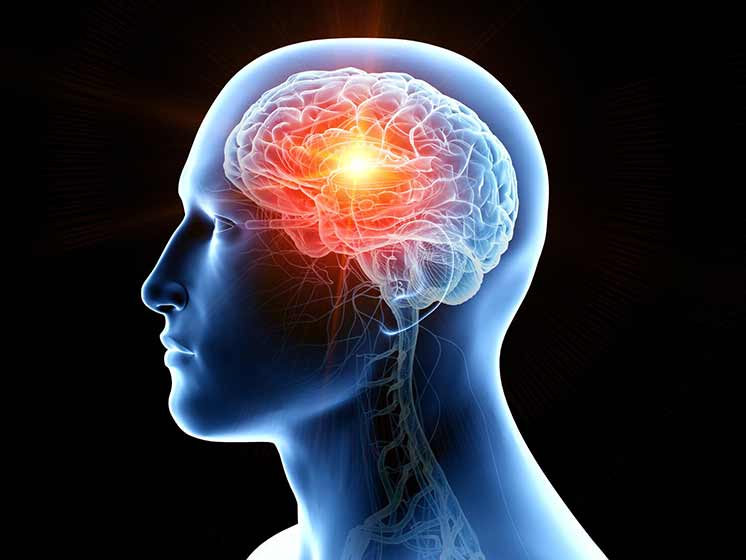
A new report published by the Lancet Commission shows that hearing loss is a risk factor for dementia.6 In fact, moderate hearing impairment can increase one’s dementia risk by 3x.
Even mild levels of hearing loss can increase the long-term risk of cognitive decline and dementia in people who are cognitively intact but somewhat hearing impaired. This is likely because hearing loss leads to lowered mental stimulation, isolation, and depression – all of which contribute to accelerated cognitive decline.
10. We have two ears for a reason
Having two ears helps us figure out which direction sounds are coming from.7 If you have hearing loss in one ear, you can probably notice that it’s hard to decipher where a particular sound is located. Therefore, it’s important to use two hearing aids instead of one when hearing loss is present in both ears, to help locate warning sounds around you, navigate safely through traffic, and walk safely across the road.
Would you like to learn more about your unique ears and hearing? Book a free hearing appointment with one of our hearing care professionals!
Sources
“How Does Our Sense of Balance Work?” NCBI, IQWiG (Institute for Quality and Efficiency in Health Care), 7 Sept. 2017, www.ncbi.nlm.nih.gov/books/NBK279394.“What to Know About Nose and Ear Growth as You Age.” WebMD, 19 Mar. 2021, www.webmd.com/healthy-aging/what-to-know-about-nose-and-ear-growth-as-you-age#1.
Legendre, Guillaume. “Sleepers Track Informative Speech in a…” Nature Human Behaviour, 14 Jan. 2019, www.nature.com/articles/s41562-018-0502-5
“Noise-Induced Hearing Loss.” NIDCD, 31 May 2019, www.nidcd.nih.gov/health/noise-induced-hearing-loss.
Gaihede, Michael. “Middle Ear Pressure Regulation–Complementary Active Actions of the Mastoid and the Eustachian Tube.” PubMed, June 2010, pubmed.ncbi.nlm.nih.gov/20393372.
Orgeta, V., Mukadam, N., Sommerlad, A., & Livingston, G. (2019). The Lancet Commission on Dementia Prevention, Intervention, and Care: A call for action. Irish Journal of Psychological Medicine,36(2), 85-88. doi:10.1017/ipm.2018.4
Hebrank, Jack, and D. Wright. “Are Two Ears Necessary for Localization of Sound Sources on the Median Plane?” The Journal of the Acoustical Society of America, Acoustical Society of America, 1974, asa.scitation.org/doi/abs/10.1121/1.1903351.
Join Our Spectacular Spelling Bee Fundraiser!
Call all word enthusiasts, language lovers and champions of compassion! Are you ready to make a difference in the lives of vulnerable seniors in our community? Step up to the challenge and have fun while raising crucial funds to support those in need. The Comox Valley Senior Support Society (CVSS) is holding their Second Annual Adult Spelling Bee fundraiser. This is a fantastic, inclusive event, with all funds raised going to support programming for vulnerable seniors in our community. How you Can Participate: 1. Spelling Participant: Register for the spelling bee and have a fantastic time trying to spell words with your team. Lunch and refreshments provided, as well as incredible prizes for best and worst spelling teams! 2. Attend & Cheer: Don’t want to spell? No worries! You can still be a vital part of our event by joining us at the event to be a part of the excitement, cheer for spellers and learn more about the cause. Your presence makes a difference too!
3. Sponsor: Support our event by becoming a sponsor for the event. Not only will you be supporting a great cause, but all sponsors also receive a table at the event to play along. 4. Spread the Buzz: Share our event with family, friends, and colleagues. Encourage them to participate, donate, or sponsor the event. Together we can create a buzzing community of support! 5. Donate: Can’t attend? Donate to support the event. Mark your calendar and spread the word! Let’s create a heartwarming, impactful and unforgettable experience as we come together to have fun and spell our way toward a brighter future for vulnerable seniors. Let’s create a buzz that truly matters – a buzz of positive change! See you at the Spelling Bee. For information and tickets: https://comoxvalleyseniorsupport.ca/events/annual-spelling-bee/
Or, to donate directly: https://comoxvalleyseniorsupport.ca/donate/
For any inquires, reach out to Christopher Bate, Executive Director, at
250-871-5940
October 1 is National Seniors Day!
Each year, October 1st is set aside to recognize the important contributions of Canadian seniors. Intended to coincide with the United Nations’ International Day of Older Persons, National Seniors Day gives us all an opportunity to pay tribute to the seniors who have helped to build our country and to raise awareness of their concerns.
There are many ways to celebrate this important occasion. Whether you’re attending a local event or spending some time with a senior you love, Federal Retirees wishes you a happy and healthy National Seniors Day!
Earwax and Hearing Aids
The two seem to go together. Too much earwax can block the ear canal, muffling sounds and causing discomfort. Hearing aids help with hearing loss but in many cases, make the person to produce more earwax. This is why Clear Ears earwax removal is now Clear Ears Mobile Hearing Clinic. Mobile Hearing Tests and Mobile Earwax removal still in the comfort of your home.
Make Social Interaction a Priority
Maintaining relationships and spending time with others is essential to our emotional and mental well-being. It can help prevent depression which affects 20 percent of the population over 70 years of age. Socializing also keeps the mind active and improvements are greater when the person is involved in fun interests with other people. Plan regular get-togethers with friends, such as a weekly lunch date or coffee with another senior or loved one. Scheduling social interactions give us something to look forward to on a regular basis. For those who are truly adventurous you can enjoy new experiences and meet new people by signing up for travel tours, book clubs, and much more at your local community centre.
